Best Digital Platforms That Bring Leads and Conversions for B2B & B2C Businesses
Why Choosing the Right Platform Matters
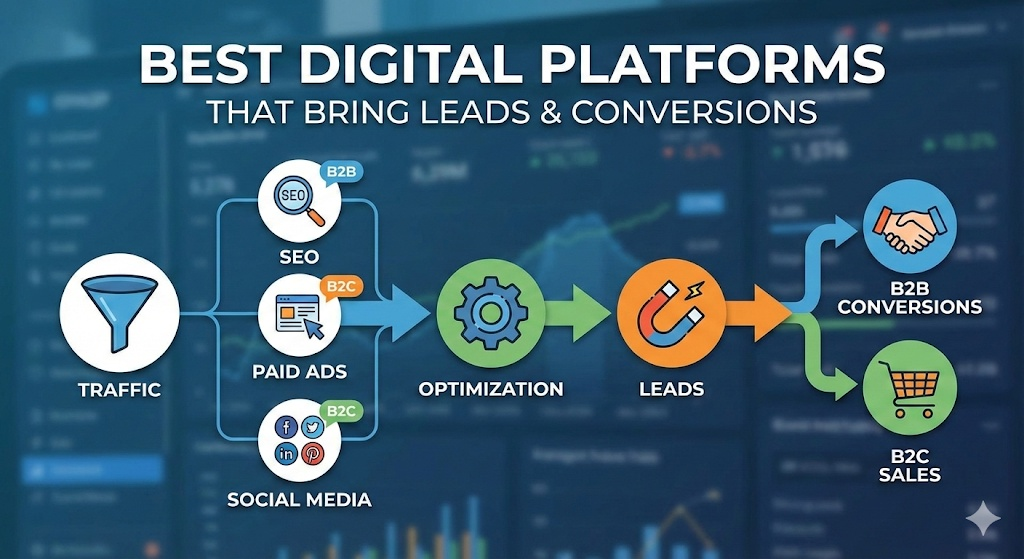
Many businesses spend money on digital marketing but still don’t get the kind of leads or conversions they expect. The main reason is simple they choose platforms based on trends instead of customer behaviour.
There is no single platform that works for everyone. A platform that works brilliantly for one business may completely fail for another. The right choice depends on who your audience is, where they spend their time online, and how they make buying decisions.
In this guide, we’ll break down the best digital platforms for generating leads and turning them into conversions. Whether you are targeting businesses (B2B) or regular consumers (B2C).
How to Choose the Right Digital Platform
Before jumping into platforms, it’s important to understand how customers actually move towards a purchase.
1. Buyer Intent Is Everything
Different platforms attract different mindsets.
- High intent: People actively searching for solutions
- Medium intent: People discovering brands while scrolling
- Low intent: People just consuming content casually
If you match your platform to intent, conversions become much easier.
2. Think in Funnel Stages
A strong digital system usually looks like this:
- Awareness → Social media platforms
- Lead capture → Search platforms
- Conversion → Follow-up tools and CRM systems
3. B2B vs B2C Behaviour
- B2B customers take time, compare options, and need trust before buying.
- B2C customers decide faster, especially when visuals and emotions are involved.
Best Digital Platforms for B2B Lead Generation
LinkedIn is one of the strongest platforms for reaching professionals, managers, and decision-makers.
Why businesses like it:
- Targeting by job title and industry
- Professional audience mindset
- Great for building authority through content
Best suited for: Agencies, consultants, SaaS companies, and high-value services.
Google Search Ads
Google Ads helps you reach people who are already searching for solutions. These users usually have strong buying intent.
Why it works:
- Keyword-based targeting
- Quick lead generation
- Easy performance tracking
Simple way to understand it: social media creates interest; Google captures people ready to act.
CRM & Automation Platforms
Tools like HubSpot help nurture leads over time, which is especially important in B2B where decisions don’t happen overnight.
Benefits:
- Automated follow-ups
- Email nurturing sequences
- Clear visibility of the sales pipeline
Best Digital Platforms for B2C Leads & Sales
Meta (Facebook & Instagram)
Meta Platforms offers huge reach and detailed audience targeting. It works well for businesses that rely on visual appeal and local targeting.
Common use cases:
- Local service promotions
- Product-based campaigns
- Lead forms and direct enquiries
TikTok
TikTok has become a strong discovery platform, especially for younger audiences. Short, real-looking videos often perform better than polished ads.
Why it works:
- High engagement
- Fast brand discovery
- Relatable content builds trust quickly
Google Local Search
A well-optimised Google Business Profile helps service businesses appear when people search nearby.
Perfect for:
- Clinics
- Salons
- Restaurants
- Local service providers
Many local businesses get consistent enquiries just by improving their local search presence.
Ecommerce Platforms
Platforms like Shopify make selling online easier with built-in checkout systems designed for conversions.
Key advantages:
- Smooth purchase journey
- Marketing integrations
- Mobile-friendly buying experience
Platforms That Improve Lead Conversion (Often Ignored)
Getting leads is only half the job. Conversion mostly depends on what happens after someone shows interest.
Email Automation
Tools like Mailchimp help businesses stay connected with leads through automated follow-ups and offers.
Live Chat & Instant Response
Intercom and similar tools help you respond instantly — which often makes the difference between closing a lead and losing it.
CRM Tracking
Platforms such as monday.com help organise leads so no enquiry slips through the cracks.
Winning Platform Combinations (Real-World Examples)
Local Service Business
Instagram Ads → WhatsApp Enquiries → Google Reviews
This builds trust quickly and drives local conversions.
B2B Agency
LinkedIn Outreach → Landing Page → Email Nurturing
Good for longer decision cycles and high-ticket services.
Ecommerce Brand
TikTok Content → Online Store → Retargeting Ads
Works well for visually appealing products.
Common Mistakes Businesses Make
Choosing platforms because competitors are using them
- Running ads without a clear follow-up system
- Ignoring audience intent
- Expecting instant results without testing and optimisation
Final Recommendation: Which Platform Is Best?
Honestly, there is no single “best” platform. The right platform is the one where your customers are already spending time and showing buying intent.
Based on your business product or service
Start with one channel, understand what works, and then slowly expand. Trying to be everywhere from day one usually leads to a wasted budget and confusion.
Conclusion
Digital platforms are just tools. The real success comes from understanding your customer journey and choosing platforms that match it.
Instead of asking, “Which platform is best?”, ask:
“Where are my customers already ready to take action?”
When you answer that clearly, your leads and conversions naturally improve.